Register Now
Phase equilibria present challenges that require a comprehensive understanding of composition, temperature, and thermodynamic relationships. This short course will cover the fundamentals of binary and ternary phase diagrams from the perspective of predicting material behavior during solidification and processing as well as high temperature material interactions. The goal is to reinforce and connect concepts in phase equilibria in a practical manner so that you can become more effective in designing compositions, controlling microstructures, and troubleshooting casting processes.
To understand the core concepts surrounding binary and ternary phase diagrams, attendees will link phase relationships to melting, solidification pathways, eutectic and peritectic reactions, phase transformations, and the microstructures produced during casting. Emphasis will be placed on applying phase diagrams to real processing problems in both metal and ceramic systems.
Practical problem sets involving phase rule calculations, tie lines, lever rule applications, and interpretation of binary and ternary diagrams will be solved.
Who Attends
Engineers, scientists and technicians interested in learning about the interpretation and applications of phase diagrams in casting operations and other high temperature contexts. Limit of 20 students.
Overview of Topics
- Gibbs phase rule
- Unary phase diagrams and phase transformations
- Binary phase diagrams
- Ternary phase diagrams
- Principles of solidification
- Equilibrium and non-equilibrium solidification
Cost
About the Instructor
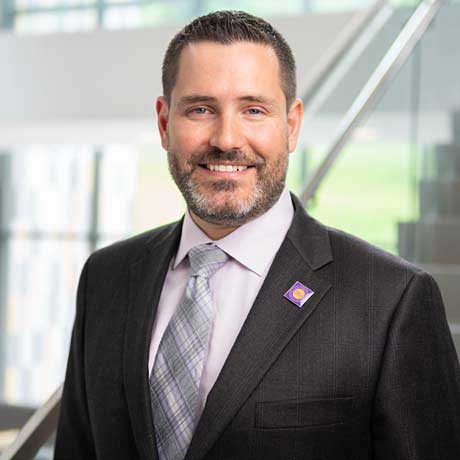
Dr. Mario Caccia is an Assistant Professor in Ceramic Engineering in the NYS College of Ceramics at Alfred University. He received his Bachelors in Geological Engineering, and his Masters and PhD in Materials Science from the University of Alicante in Spain. Dr. Cacciaserved as a postdoctoral researcher and later as a Senior Research Engineer at Purdue University. Prior to his appointment at AU he served for three years as an Assistant Professor in the Metallurgical and Materials Engineering Department at Montana Tech. His expertise lies in the broad field of ceramics processing, and his research focuses on processing of high temperature ceramics and ceramic-based composites as well as high temperature melt properties (wettability, surface tension, solidification). Additionally, he is actively involved in applied research focused on structure-property relationships and elucidating processing-performance relationships for various kinds of materials (metals, oxide ceramics, non-oxide ceramics).
Register Now
Ceramic processing presents challenges that require comprehensive control over powder characteristics, interparticle interactions, and forming conditions. This short course will cover the fundamentals of ceramic processing from the perspective of understanding and predicting processing outcomes and minimizing defects in products. This course aims to reinforce concepts for non-ceramic engineers working in the ceramic industry so that they can better contribute to their processes.
To understand the core concepts surrounding colloidal stability, rheology, powder characterization, and forming techniques, students will link powder behavior to processing performance and the properties of the final ceramic produced.
Practical problem sets involving suspension stability, rheological behavior, and powder characterization will be solved, while laboratory sessions will provide hands-on experience with forming methods and characterization tools. Strengthening fundamental processing-property knowledge will help engineers, improve their processing, troubleshoot manufacturing problems, and better control ceramic production.
Who Attends
Non-ceramic engineers and scientists interested in learning about ceramic manufacturing through fundamental processing-structure-property relationships or ceramic engineers in need of a refresher. Limit of 20 students.
Overview of Topics
- Raw ceramic powder characterization
- Mixing and milling
- Processing additives and processing consistencies
- Formulations and batch calculations
- Colloidal stability and rheology
- Forming operations
- Firing and sintering
Cost
About The Instructors
Dr. Mario Caccia is an Assistant Professor in Ceramic Engineering in the NYS College of Ceramics at Alfred University. He received his Bachelors in Geological Engineering, and his Masters and PhD in Materials Science from the University of Alicante in Spain. Dr. Caccia served as a postdoctoral researcher and later as a Senior Research Engineer at Purdue University. Prior to his appointment at AU he served for three years as an Assistant Professor in the Metallurgical and Materials Engineering Department at Montana Tech. His expertise lies in the broad field of ceramics processing, and his research focuses on processing of high temperature ceramics and ceramic-based composites as well as high temperature melt properties (wettability, surface tension, solidification). Additionally, he is actively involved in applied research focused on structure-property relationships and elucidating processing-performance relationships for various kinds of materials (metals, oxide ceramics, non-oxide ceramics).
Matthew Creedon, Ph.D. is a ceramic engineer and materials scientist with over four decades of experience developing advanced ceramic materials for defense, industrial, and commercial applications. Creedon earned both his B.S. in Ceramic Engineering (1984) and his Ph.D. in Ceramics (1996) from the New York State College of Ceramics at Alfred University. His doctoral research, funded by the Office of Naval Research, focused on piezoelectric composite materials for hydrophone applications.
His career began at United Technologies Optical Systems, where he spent nearly a decade developing silicon carbide components for high-energy lasers and space-based optics. He subsequently held positions at Allied Signal (now Honeywell FM&T), studying the effects of aging on ceramic and glass components from decommissioned defense systems. That was followed by a nearly a decade at Ferro Electronic Materials Systems, where he developed dielectric ceramic powders and processing. He then served as Process Development Manager at Unifrax (now Alkegen), advancing ceramic fiber manufacturing for the automotive sector, followed by roles at Saint-Gobain Ceramic Materials and, most recently, Washington Mills Electro Minerals, where he led R&D for fused minerals, silicon carbide and boron carbide powders through 2025.
Today, Creedon is active across several professional roles. He serves as a Research Scientist at the Center for Advanced Ceramic Technology at Alfred University, continuing his long association with the institution where he trained. He also provides technical guidance as an advisor to Blue Star Advanced Manufacturing. In addition, he is the founder and Principal Consultant of MC Squared Consulting, through which he draws on his broad industry expertise to support clients in ceramics, materials processing, and advanced manufacturing.
Throughout his career, Creedon has been recognized with multiple innovation awards, holds a U.S. patent in multi-phasic ceramic composites, and has contributed to NASA research on lunar regolith simulants. He is an active member of the American Ceramic Society — currently serving as Chair of the Coble Award Committee — and sits on several university advisory boards. He was listed in Marquis Who's Who in America in 2024.
Register Now
Glass processing is fraught with challenges that require a comprehensive control on melt chemistry. This short course will cover the basics of glass science from a perspective of predicting outcomes. When you can predict outcomes, you can help solve challenges in glass manufacturing. We hope to reinforce and connect concepts in glass melting in a practical manner so that you can become a better glass maker.
To understand the core concepts around viscosity, diffusion, batch composition, raw materials, oxidation-reduction, furnaces, refractory corrosion, strengthening and durability, students will link the melting process to the glass produced.
Practical problems sets involving redox and viscosity will be solved. Strengthening predictive capacity will help glass engineers who want to improve their processing but may lack the knowledge to do so.
Who Attends
Engineers, scientists and technicians interested in learning about glass manufacturing through the fundamental structure property relationships. Limit of 18 students (core course); Limit of 6 students (per optional laboratory experience.)
Overview of Topics
- SLS structure and properties
- Fluidity and Viscosity
- Diffusion and rates of processes
- Batching versus Glass Chemistry
- Oxidation-Reduction processes
- Furnaces influence on melting & corrosion
- Glass strength & surfaces
- Chemical Durability & mitigation strategies
- Spectroscopy to Improve Quality control
Optional Hands-On Experiences
- Glass Melting of Redox Sensitive Elements
- UV-Vis, XRF, and Raman Spectroscopy
Cost
- Standard Rate: $1,500
- Glass Melting Lab Add-On: $500
- UV-Vis, XRF, and Raman Spectroscopy Lab Add-On: $500
- Both Lab Add-Ons: $2,500
Resources
A classroom and furnaces for melting for one day and the spec lab for half of the day will be available.
About the Instructors
Dr. Dan Swiler is a glass industry veteran with 45 years of experience. He is an Alfred alumnus who went on to work for 20 years with Drakenfeld developing pigments and coatings for glasses and ceramics while developing quality control procedures for plants internationally. He spent another decade with O-I developing vacuum melting and novel refractories while working on improving furnace life and production problems. During this time, he spent effort in glass strengthening, durability and fining as these were persistent issues. Since 2022 he has taught a industrial glasses course at Alfred University and consults for the industry at large.
Dr. Benjamin Moulton is an assistant professor in Glass Science and Engineering at Alfred University with a decade of expertise in glass structure-property relationships worldwide. His emphasis has been using Raman, IR, and X-ray spectroscopies to interrogate glass structure in situ at gigapascal pressure and melt temperatures. He has used spectroscopy to identify problems in the bulk as well as in glass beads. bubbles and fibers. His work has been aimed at finding the limiting conditions on glass behavior and extending our predictive capacity by looking for global, rather than local, solutions.