


In an op-ed published this week in the Rochester Democrat and Chronicle, Alfred University President Mark Zupan discusses how college affordability for American families is reflected in a “K-shaped” economy.
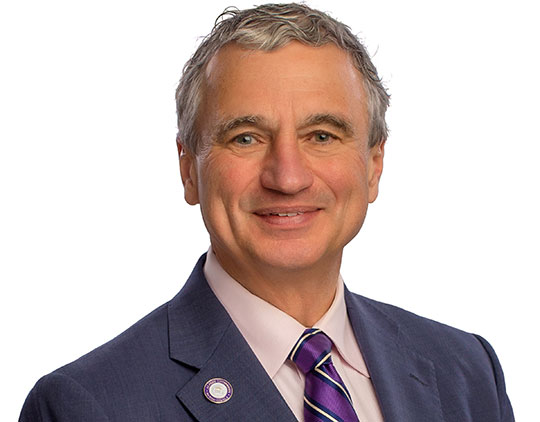
The op-ed, titled “K comes to the U and why it matters,” appeared in the Sunday, May. 10, issue of the Democrat and Chronicle. In the piece, Zupan explains the K-shaped economy, in which a smaller group of high-income earners reside in the top portion of the “K,” while the larger number of American families lie under the lines of the bottom of the “K.”
While high earners are willing to pay full price to for their children to attend prestigious private schools, sometimes at an annual cost of more than $90,000, most colleges and universities are increasingly competing for less affluent students whose families reside in the bottom of the K-shaped economy. This dynamic, Zupan says, impacts what students actually pay each year to attend college and has made college acceptance a “buyer’s market” in which the net tuition cost, after financial aid, is declining.
“While rising list prices continue to signal prestige and capture top-of-the-K families still willing to pay full price, schools are competing ever more aggressively to attract those families either unwilling or unable to pay the full freight.,” Zupan writes. “Top-of-the-K families aren’t sufficient to fill the number of slots in an entering class, so colleges offer a more attractive financial aid package to enroll students from bottom-of-the-K families.”
To compete, Alfred University makes a concerted effort to make net cost of attending college affordable by offering financial aid packages that keep the average net annual cost of attending under $20,000. It also offers options to “fast-track” students toward professional success by allowing them to complete some degree requirements in three years, which results in a one-year savings on the cost of attendance.