

Stepping outside the classroom and into the world of research, Alfred University students recently had the opportunity to attend and present their research at a national conference hosted by the American Society for Biochemistry and Molecular Biology (ASBMB).
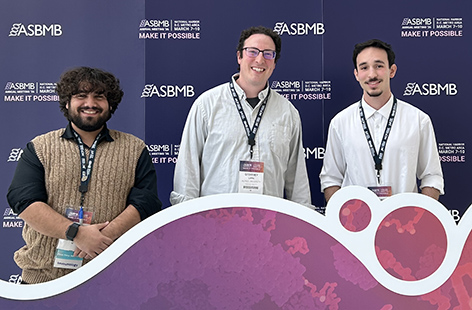
Accompanied by Associate Professor Geoffrey Lippa, students were able to experience what science looks like beyond lectures and textbooks. The conference focused on current developments in biochemistry, molecular biology, lipid metabolism, and related fields.
For Lippa, the value of attending went beyond just learning new information. “It was valuable for us to learn about new research in immunology and virology, while sharing our findings with the science community,” he explained. Being surrounded by researchers from around the world allowed both faculty and students to see where the field is going and how their own work fits into that bigger picture.
Unlike a traditional classroom setting, the conference offered a completely different learning environment. Presentations were structured as symposiums, with multiple speakers discussing the same topic from different angles. In addition, workshops and networking sessions gave students practical guidance on building resumes, preparing CVs, and applying to graduate school. It created a space where learning was not just about content, but also about professional growth.
Students Pedro Soccal and Ehab AlQtam had the opportunity to present their own research at the conference. Focusing on virus-host interactions, their work focused on how the NS1 protein from the West Nile virus interacts with a human protein called Elongin B. The goal of their research is to better understand how viruses bypass natural defense mechanisms in the body, potentially leading to new treatment strategies.
For Pedro, the experience was both exciting and motivating. He was especially interested in how this type of research could contribute to developing treatments for diseases that currently have no cure. One presentation that stood out to him focused on a promising HIV treatment that targets the formation of the virus capsule, preventing infection at multiple stages. Seeing research at that level gave him a clearer picture of what is possible in the field.
Ehab shared a similar perspective, highlighting how the conference changed the way he sees his future. Being surrounded by experienced researchers made the idea of becoming one feel more real. “It allowed me to see myself as a future presenter,” he said. “I want to one day give a lecture there.”
Beyond the research itself, both students said the conference was a valuable opportunity for networking with students and researchers sharing their own interests. As Pedro advised, planning ahead and taking initiative during the conference can make a big difference in both their academic and future professional careers.
“The information you will obtain will be way more valuable than you could ever imagine,” Ehab added.
For Lippa, such experiences are essential to the academic experience. They bring people together to share ideas, successes, and even failures, creating a strong sense of community within science.
This article was written by undergraduate Andri Maltsev.