

Artificial intelligence research that once required access to expensive, specialized hardware is becoming much more accessible to Alfred University students and faculty. That opportunity comes through Alfred University’s new access to the National Research Platform, a shared national computing resource designed to support artificial intelligence and data-intensive research.
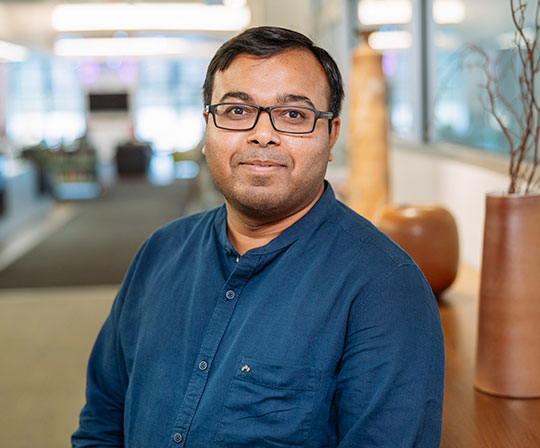
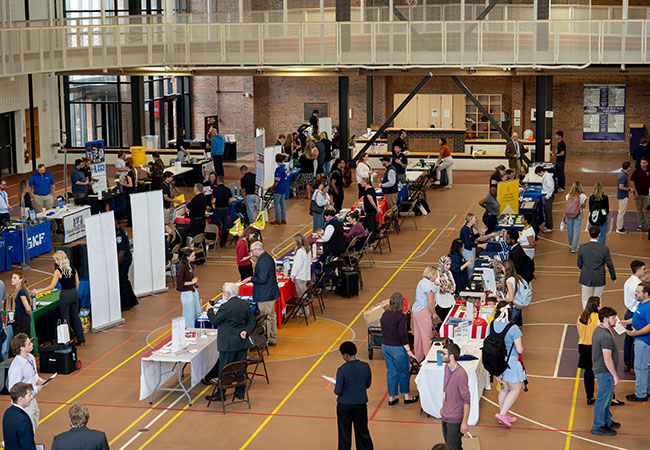
Chandan Kumar, assistant professor of computer science, helped secure that access after being selected to attend the National Artificial Intelligence Research Resource (NAIRR) Pilot Classroom Expansion Conference, held in June in in Denver, CO. The conference, organized by the Computing Research Association as part of the National AI Research Resource Pilot, brought together educators working to expand access to advanced AI computing and education. During the conference, Kumar connected directly with the NAIRR team and gained access to the National Research Platform for Alfred University.
For students and faculty, the biggest advantage is access to powerful computing resources, particularly graphics processing units, or GPUs, which are essential for training many modern artificial intelligence models.
“The National Research Platform gives us access to national-scale computing built for artificial intelligence,” Kumar said. “Training a serious deep learning model needs hardware that a typical campus lab does not have.”
Rather than being limited by the computing equipment available on campus, Alfred students and researchers can now run AI workloads using national infrastructure. “In short, work that used to require expensive local hardware is now within reach for anyone at Alfred with a good idea,” Kumar said.
The impact could be especially significant in the classroom. Kumar’s computer vision and deep learning course offers one immediate example. Students in the course build and train deep learning models using real image datasets, work that can quickly exceed the capabilities of a laptop or shared laboratory computer as models and datasets become larger.
With access to the National Research Platform, students can take on more ambitious projects and complete experiments significantly faster.
“A student can train a model that would otherwise be impractical and get results in hours instead of days,” Kumar said. “That changes how much they can actually learn and experiment within a semester.”
The same infrastructure will also support Kumar’s research, which focuses in part on developing artificial intelligence systems capable of learning from unlabeled images. Many AI systems depend on large datasets in which images have been manually identified or categorized. Creating those labels can be expensive and time-consuming. Kumar’s research explores ways for models to learn useful information directly from images without requiring the same level of manual labeling.
The approach can be particularly valuable in fields where large quantities of images exist but labeled data is limited, including satellite and aerial imagery, agricultural data, and imaging related to battery and energy materials. Developing those methods requires researchers to train models repeatedly and test them across many different conditions. “This national infrastructure is what makes that scale of experimentation possible for us,” Kumar said.
Alfred’s access also reflects a larger national effort to make advanced AI infrastructure available beyond major research institutions. Large universities often have the resources to build and maintain their own computing clusters, but the NAIRR Pilot is intended to expand access to researchers and students who may not have those same local resources.
“The NAIRR Pilot exists specifically to broaden access to AI beyond the largest, best-funded universities, and that is where Alfred benefits,” Kumar said. “We are not competing on the size of our endowment or our data center. We are competing on access, and on that front our students are now on equal footing.”
For Alfred students interested in artificial intelligence, computer science, data science, and related fields, which means gaining experience with the type of computing infrastructure used in advanced academic and industry research while still at the undergraduate level. Kumar hopes the next year will be focused on making that experience a regular part of AI education at Alfred.
“Over the next year I want to make AI computing a normal, hands-on part of how we teach, starting with my own courses and expanding from there,” he said.
Kumar also hopes to help faculty members in other disciplines explore how artificial intelligence and national computing resources could support their own teaching and research.
“I would like our students graduating with real experience on national AI infrastructure, and I want to help other faculty who are curious about AI find an easy way in,” he said. “The goal is to build early momentum so that we can grow into something lasting.”
Story written by Andrii Maltsev ’27