Courses for the Biomaterials Engineering Major are listed in our digital Undergraduate Catalog.
View Major Courses
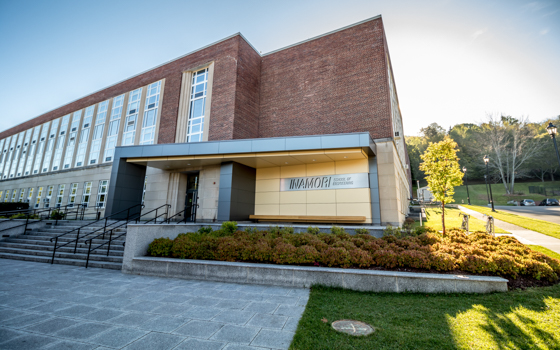
Biomaterials Engineering is available as a double major to any Inamori School of Engineering undergraduate. Courses for the Biomaterials Double Major are listed in our digital Undergraduate catalog.
Learn More About Double Majors
View Double Major Courses
Courses for the Biomaterials Engineering Minor are listed in our digital Undergraduate Catalog.
View Minor Courses
If you have varied interests in engineering but are unsure which you excel at or enjoy working with the most, consider exploring our Undecided Engineering pathway. The Inamori School of Engineering provides this option to students who are undecided as first-year students and allows them to discover the field of engineering that's the best fit for them.
What Will You Do?
Within the past few years, graduates have obtained jobs as:
- Bioenvironmental Engineer - United States Air Force
- Surgical Technologist - Albany Medical Center
- Laboratory Technician - Stryker
- Business Support Specialist - Synergy Pharmaceuticals, Inc.
Biomaterials Engineering majors study the interaction between non-living materials and biological systems. Our graduates will develop next generation biomaterials devices for applications such as:
- New diagnostic instruments (including bimolecular materials hybrid devices such as gene chips).
- Novel therapeutic strategies such as tissue engineering and implants for biosensors and targeted/controlled drug delivery systems
- New biomaterials for classic applications such as orthopedic devices.
Program Educational Objectives (PEOs)
Program educational objectives (or PEOs) are broad statements that describe what we expect graduates of AU's biomaterials engineering program to attain 3-5 years after graduation. PEOs are reviewed and revised regularly to ensure that the program educational objectives are relevant to the needs of today's employers.
During the first few years after graduation:
- Graduates will be qualified for careers in the medical device industry alongside related, and general, materials fields. Graduates will occupy positions with high technical skill requirements and managerial responsibility.
- Graduates will be prepared to continue their educational endeavors in both technical and non-technical fields including graduate studies in Biomedical Engineering, Tissue Engineering, medical Devices, general materials and other science and engineering majors; MBA programs, medical and veterinary schools, law school or short course/workshops applicable to growth within a chosen technical field.
- Graduates will be prepared to lead in the development of their professions including society activities, scholarly publications and student recruiting and mentoring.
Program Outcomes (Student Learning Outcomes)
Graduates of the Biomaterials Engineering program at Alfred University will have:
- An ability to identify, formulate, and solve complex engineering problems by applying principles of engineering, science, and mathematics.
- An ability to apply engineering design to produce solutions that meet specified needs with consideration of public health, safety, and welfare, as well as global, cultural, social, environmental, and economic factors.
- An ability to communicate effectively with a range of audiences.
- An ability to recognize ethical and professional responsibilities in engineering situations and make informed judgments, which must consider the impact of engineering solutions in global, economic, environmental, and societal contexts.
- An ability to function effectively on a team whose members together provide leadership, create a collaborative and inclusive environment, establish goals, plan tasks, and meet objectives.
- An ability to develop and conduct appropriate experimentation, analyze and interpret data, and use engineering judgment to draw conclusions.
- An ability to acquire and apply new knowledge as needed, using appropriate learning strategies.
Nationally, about a third of biomedical materials undergraduates go straight on to the job market, a third to graduate school (law, business, etc.), and a third to medical school.