

An innovative new program in Alfred University Athletics Department is providing student-athletes with the tools they need to thrive in the classroom and in competition while laying a foundation for continued success after graduation.

The Saxon Success Program was launched last fall with a goal of providing broad-based training to student-athletes, coaches, and athletics department staff. Five core components comprise the program: life skills, leadership, staff professional development, sport psychology/mental training, and academic success.
The program is supported in part by The Fahey Fund, which was established in 1998 by Russ Fahey ’58 and his wife, Patricia, as a way to help first-year football players make the needed adjustments to college life. Russ, who earned a bachelor's degree in ceramic engineering and participated in football and track and field at Alfred, served on the university’s Board of Trustees from 2003-08.
“So many kids get to college and the school doesn’t have the necessary discussions with players” on what they need to do to succeed, Russ explained “So they fail. I saw kids leaving and not coming back. I thought, this is crazy. Why isn’t someone helping these kids?”
Russ said he himself struggled initially after arriving on campus as a first-year student in 1954. He recalled Fred Gertz, dean of students at the time, engaging him in a frank discussion about his prospects for continued enrollment at Alfred. “He told me, you have to pay attention, or you won’t be here next year. So, I did. But there were many others who didn’t make it. For me personally, that changed my life. I know the value of having someone to talk to.”
The Fahey Fund “started out as a retention program,” Pat added. “We wanted to design something to help the freshmen football players, teach them skills like time management, how to make up missed classes and tests; how to get along with their roommates; keeping a checkbook—skills that many student-athletes were lacking.”
The initiative eventually expanded to include serving all first-year student-athletes and now, as the Saxon Success Program, provides guidance to all student-athletes enrolled at Alfred.
“There have been success initiatives in the past for student-athletes, but this is far more comprehensive,” said Deb Steward, Associate Vice President for Student Experience, Athletics and Recreation. “This is process focused. If we execute the process correctly, the success will come. We need our students taking care of business in the classroom; that shows they are committed to the process.”
Under the program’s life skills component, student-athletes participate in 45-minute seminars, called “huddles,” which are offered according to their class year. First-year students’ seminars focus on areas aimed at helping them acclimate to life as a college student-athlete. Sophomores are taught about researching careers and securing internships, networking, and personal empowerment. Juniors’ huddles teach students how to market their athletics careers to potential employers, setting their career plans in motion, and becoming vocal leaders. Seniors’ discussions include securing their financial futures, developing an identity post-athletics, and prioritizing lifelong fitness and health.
Student-athletes are taught leadership skills through the LEAD (Learn, Empower, Achieve, Develop) model. Students leaders from each varsity athletics team—self nominated or chosen by their coaches—engage in a leadership curriculum and summit while applying their leadership skills to their teams and also in a seminar with underclass students.
LEAD athletic workshops are led by Dr. Chrissy Holm Haider, a Minneapolis, MN-based sports psychology consultant. The athletics department partners with the Judson Leadership Center in the LEAD Summit to provide student-athletes leadership training “in a collaborative team setting,” Steward said. “The goal is to help students develop leadership skills through various experiential learning activities, which they will then apply to their teams, in class, and in other settings.”
Steward pointed to the benefits of fostering leadership skills in student-athletes, which benefit them on their teams and in the classroom, and also long-term in their lives after graduation. “Everything in athletics is transferrable to everyday life,” she said. “We want our students to go out as citizens engaged where they live and work, as leaders in their families, their jobs, and their communities.”
Holm Haider leads four one-hour professional staff development sessions focusing on leadership as well as sports psychology/mental training sessions for student-athletes and teams. The latter sessions address topics such as performance anxiety, confidence, and building goals.
The athletics department tracks student-athletes’ performance in the classroom. An academic success committee headed by Erin Schurr, associate athletic director, monitors student-athletes’ compliance with minimum academic standards and ensures that they are utilizing the resources available to them. Dr. Nicole Bernsen, director of the rugby program and head women’s rugby coach, and Adair Milmoe, head field hockey coach, also serve on the committee; both have backgrounds in academic success programs at their previous institutions of higher education.
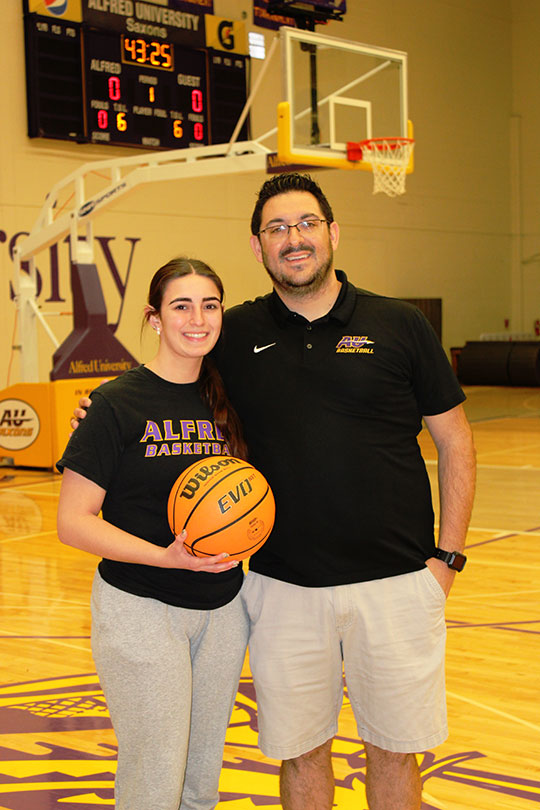
Mike Moskowitz, seventh-year head women’s basketball coach, said student-athletes have provided the Athletic Department feedback on the Saxon Success Program. “It is ever evolving, and we are constantly looking for ideas to improve their lives as members of their teams, our athletic department, and campus community as a whole. This has certainly led to our student-athletes feeling supported across the board, with opportunities for growth and a stronger connection to the athletic community.”
The impact of the Saxon Success Program from an academic standpoint is evident. There was an increase in overall grade-point averages of all student-athletes as demonstrated by the Fall 2023 GPA of 3.18 for 487 student-athletes to the Fall 2024 GPA of 3.26 for 527 student-athletes. In addition, there has been an increase among students with a GPA 3.50 or higher, with 74 more student-athletes achieving that mark or higher in Fall 2024 as compared to Fall 2023.
“This will increase retention, persistence, and graduation rates,” Steward said. “It is an enrollment driver; a tool coaches can use for recruiting.”
Moskowitz agreed. “When we meet with recruits and their families, this is a big talking point. We often talk about being a program that focuses on developing people and these additional resources offered by our department help us do just that,” he said.
Alyssa DiMillo, a senior member of the women’s basketball team, touted the benefits of the Saxon Succes Program during her time as a student-athlete at Alfred. “I have become more self-aware of my strengths and weaknesses and have learned how to become a better leader for my team, and how to build confidence in myself and others,” said Alyssa, a business administration major from Syracuse.
Steward credited the Faheys for making the Saxon Success Program possible and for their continued support of Alfred University student-athletes. “I can’t emphasize enough the generosity of the Faheys and how it has allowed us to enhance the opportunities for our student-athletes,” she said, adding that the Saxon Success Program also receives support from Saxon Nation, the fundraising organization for the athletics program.
“We’re very happy with how it has grown,” Pat says. “So many people have brought new ideas and have improved it far beyond what I’d ever imagined it would become. This helps these kids not only become good students, but also good employees and good citizens.”