MessageOpen or Close Message
Close
It's Not Too Late to Apply!

We're continuing to review applications! You're going to love being a Saxon, and we would be so happy to have you.

Apply Now

A female shown next to a large purple sign on a college campus that says Fiat Lux!
Contribute

Have an idea for a post on our blog? We'd love to hear from you! 

Submit an Idea

About the Spark

The Spark is the official blog of Alfred University, created to illuminate the dynamic experiences, creative achievements, and unique perspectives of our student community. The Spark captures the essence of what it means to be a Saxon. Whether you're a prospective student dreaming of your next chapter, or a current Saxon shaping your journey, let The Spark guide you. 

How Alfred Engineers Helped Build a Power Grid Lab in Arkansas

Posted By Alfred University

Most college engineering projects focus on solving problems in the classroom or laboratory. At Alfred University, one recent project extended far beyond campus. When the University of Arkansas-Pulaski Technical College (UA-PTC) needed help installing advanced power grid simulation software for a new workforce training lab, the institution turned to an unlikely source of technical support: faculty, staff, and students from Alfred University's Inamori School of Engineering.

The collaboration highlights how hands-on learning experiences can prepare students not only to use cutting-edge technology, but also to become experts others rely on.
Share this Post

Building Expertise in the Energy Industry

The story began in 2024, when Alfred University launched its GE Vernova Advanced Power Grid Lab, a facility designed to prepare students for careers in the growing renewable energy and power industries.

Supported by a NYSERDA grant and millions of dollars in donated software from GE Vernova, the lab gives students access to the same technologies used by utilities and grid operators across the country.

The software trains students in power grid planning, operations, and management, helping bridge the gap between classroom learning and the needs of today's energy workforce.

According to Alfred electrical engineering professor Xingwu Wang, the GE Vernova software is used in more than half of grid management facilities nationwide, making it a valuable tool for students preparing to enter the field.

Learning By Solving Real Problems

Installing the software wasn't a simple process. When Alfred first received the software, faculty and students largely had to figure out the installation themselves, relying on online resources and troubleshooting along the way. That experience ultimately became an advantage.

Over time, the team developed expertise that few universities possessed. So when UA-PTC acquired the same software and discovered technical support was limited, GE Vernova connected them with Alfred University.

Rather than calling a vendor, they called Alfred.

Students as Industry Contributors

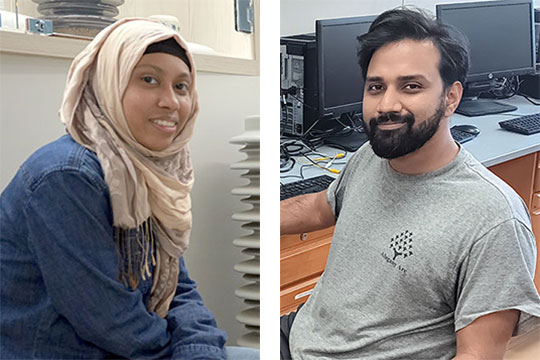
One of the most striking aspects of the story is the role students played. Working alongside faculty members, Naimul Haque, who earned his master's degree in electrical engineering from Alfred in May and is now pursuing a Ph.D., and Jannatun Naiem, another current master's student in electrical engineering, helped install the software remotely for the Arkansas lab.

Their work demonstrates the level of expertise students can develop through hands-on projects and industry-focused learning experiences. Instead of simply learning how power grids operate, they gained the technical knowledge necessary to help another institution build its own workforce training program.

headshots of Jannatun Naiem and Naimul Haque
Jannatun Naiem, a master’s degree student in electrical engineering at Alfred University, and Naimul Haque, who earned a master’s degree in electrical engineering from Alfred in May

More Than a Classroom Experience

For prospective engineering students, the project offers a powerful example of experiential learning in action.

The Advanced Power Grid Lab includes a microgrid control center and a distributed energy resources command center, giving students opportunities to work with technologies that mirror those used throughout the energy sector. Students don't just study energy systems. They use professional-grade software, participate in industry training, and work on projects with real-world applications. In this case, that experience led directly to a situation where Alfred students and faculty became the experts others looked to for guidance.

Preparing the Energy Workforce of the Future

As renewable energy systems expand and power grids become increasingly complex, demand continues to grow for professionals who understand modern grid technologies.

Programs like Alfred's renewable energy engineering and electrical engineering degrees are designed to meet that need by giving students practical experience with the tools and systems used throughout the industry.

The partnership with UA-PTC also highlights another important outcome of hands-on learning: confidence. When students contribute to projects with real-world impact, they graduate with more than technical knowledge. They gain experience solving problems, collaborating with professionals, and applying their skills in meaningful ways.

Looking Ahead

Engineering education is often measured by what students learn. But stories like this demonstrate another important measure: what students can do.

By helping install advanced power grid software hundreds of miles away, Alfred students and faculty showed how expertise developed on campus can create opportunities well beyond it.

This post was inspired by an article in Alfred University News.

Read More News at Alfred University

Related Posts

A photo of the Ormsby-Prutsman family
Posted By Carol Marcy
July 22, 2026
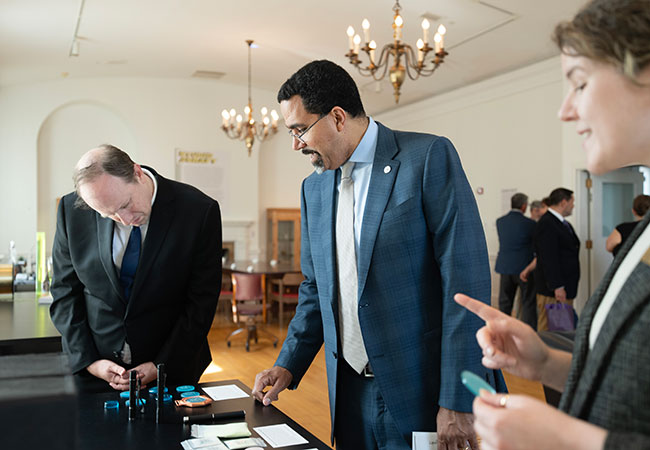
A photo of SUNY Chancellor John B. King Jr. looking at an art display in the New York State College of Ceramics at Alfred University
Posted By Alfred University
July 21, 2026
A photo of Roque Santiago
Posted By Alfred University
July 20, 2026
We'll Help You Find the Answers

Contact Us

Office of Marketing & Communications
Greene Hall
M-F, 8:30a - 4:00p
Emma Vallelunga
Emma Vallelunga
Digital Content Specialist
Mark Whitehouse
Mark Whitehouse
Director of Communications