


Alumnus Lester Friedman ’67 has co-authored a book that examines the relationship between film directors and movie composers, featuring analysis of iconic films.
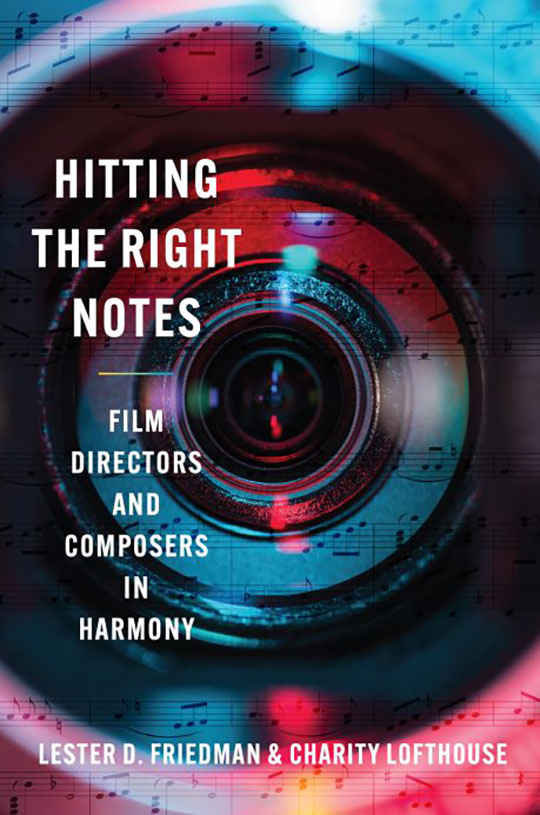 The book, “Hitting the Right Notes: Film Directors and Composers in Harmony,” was co-written with Charity Lofthouse. Published by Rutgers University Press, it is set for release on November 10. According to the publishing company, the book is a “unique, multi-disciplinary volume co-authored by scholars from both media studies (Friedman) and music theory (Lofthouse).”
Friedman is Emeritus Professor and former chair in the Media and Society Program at Hobart and William Smith Colleges. He earned a bachelor’s degree in English from Alfred University in 1967 and also has master’s and doctoral degrees in English from Syracuse University. Lofthouse is associate professor of music at Hobart and William Smith.
The book “features a chronological and systematic approach that concentrates on analyzing representative scenes from a broad spectrum of mainstream movies as exemplars. With a distinctive focus on versatile analytical tools from film studies, music cognition, and music theory, each chapter supplies background on the time period, director, composer, and their working relationship, then a close reading incorporates both visual analysis and musical elements beyond pitch and harmony,” Rutgers University Press says. “Robust yet accessible, Hitting the Right Notes highlights up-to-date ways of understanding film music, directly demonstrates their application across eras and genres, and displays the artistic magic directors and composers create together. It is essential reading for those interested in film and music.”

Hitting the Right Notes contains chapters and case studies featuring such motion pictures as “Jaws,” “The Color Purple,” “Blade Runner,” and “Batman.”
Also in November, the second edition of Friedman’s book, Bonnie and Clyde (BFI Publishing) is set for release. Originally published in 2019, the book explores the cultural framework, examines the contributions of its creators, and presents a detailed visual and thematic analysis of the 1967 film, “Bonnie and Clyde,” starring Faye Dunaway and Warren Beatty as the notorious Great Depression-era bank robbers.