

Reza Mirzaei, clinical assistant professor of art history at Alfred University’s School of Art and Design, has published a peer-reviewed article in History of Photography, a leading journal published by Routledge (Taylor & Francis).
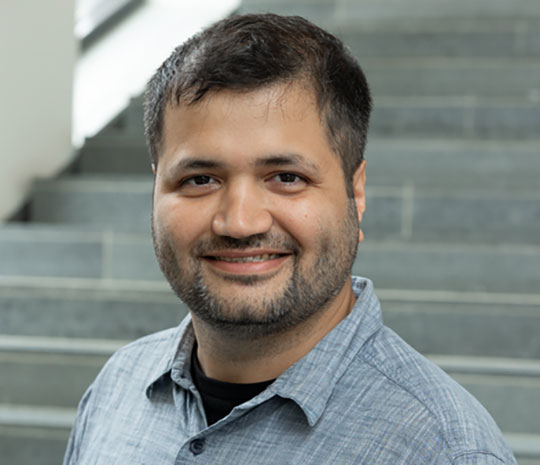
Reza Mirzaei
The article, titled "Accounting Difference: Institutional Avant-Gardism and Class Representation in Mir Seid Ali's Photographic Archive," examines the photographic practice of Mir Seid Ali, a significant yet understudied figure in late nineteenth century Iranian visual culture who served simultaneously as a royal accountant and photographer in the court of Naser al-Din Shah.
Through close analysis of portraits housed in Tehran's Golestan Palace archives, Mirzaei reveals how Mir Seid Ali's deliberate compositional choices challenged the rigid social hierarchies of his time. His use of the same ornate balustrade across portraits of both elite courtiers and manual laborers created unexpected visual parallels between subjects from vastly different social positions. Equally striking, his systematic documentation of courtiers in paired configurations, alternating between seated poses in restrained attire and standing poses in elaborate ceremonial dress, exposed the constructed and performative nature of social identity within the late Qajar court.
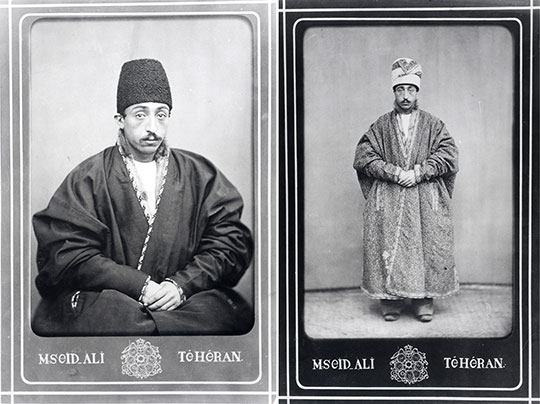
Mirzaei introduces the concept of an "institutional avant-garde" to describe how photographers working within the Qajar court developed innovative visual strategies not by opposing official structures, but by subtly reconfiguring them from within. The study situates Mir Seid Ali's work alongside that of his contemporary Antoin Sevruguin, illuminating a distinctively Iranian photographic modernism that prefigured photography's pivotal role in the Constitutional Revolution period.
This research contributes to expanding how art historians understand modernism beyond European frameworks, demonstrating that critical artistic innovation can emerge through negotiation with institutional power rather than opposition to it. The article is part of Mirzaei's ongoing project on Qajar court photography and visual culture.